
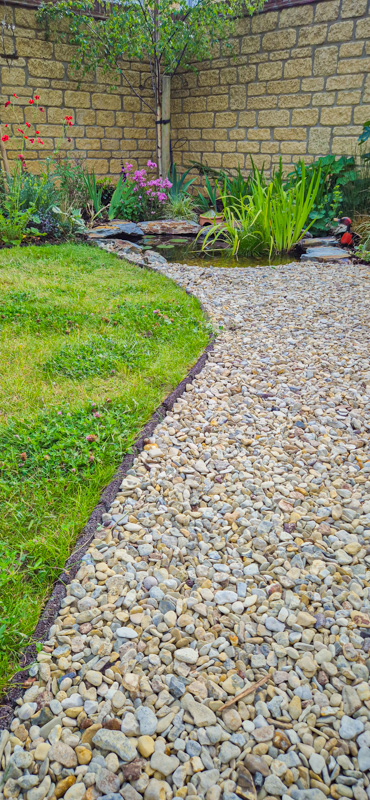
If you’re thinking about redesigning your garden, creating garden borders can be a great place to start. Whether you’re creating a flower bed or looking to tidy up your lawn, borders can be a great way to define the space, and keep your garden neat and organised. But to get the best results, you’ll need to bear a number of factors in mind, including the shape of your garden border. So what are the effective garden border shape ideas? And how can you get the right results from your garden border?
So what are the different garden border shape ideas?
There are a number of different shape options that can be an effective choice for your garden borders. These include:
- Curved borders
- Straight borders
- Deep borders
- Narrow borders
- Circular and island beds
Choosing curved borders for your garden
Curved borders are one of the most popular choices for gardens, particularly if you want to create a softer and more relaxed appearance. This is because gentle curves mimic the flowing shapes found in nature and this can help the garden feel more welcoming.
In addition, curved borders also encourage the eye to move gradually through the space, softening hard landscaping features and reducing the formal feel of straight lines. As a result, this type of border works particularly well in cottage gardens, wildlife-friendly spaces, and gardens that are designed to have a more informal character.
Choosing straight borders for your garden
Straight borders create a clean and organised appearance that suits both contemporary and formal gardens. By using borders for crisp lines you can create a sense of order and can make the overall layout feel more deliberate.
Straight borders can be a great choice alongside patios, fences, and pathways and they can help make smaller gardens appear more spacious by emphasising long, uninterrupted lines.
Deep borders for layered planting
While the outline of a border is important, its depth should also be considered. Deep borders provide more space for creative planting and this in turn can create a fuller, more luxurious appearance. This is because the additional room allows you to arrange plants in layers, with taller varieties towards the back and smaller plants nearer the front. This creates depth and ensures individual plants can still be seen clearly.
Narrow borders for smaller spaces
Narrow borders can be a practical and effective option for gardens of any size, but when space is limited, these are the perfect solution.
Positioned alongside fences, walls, or pathways, narrow borders allow you to introduce colour and texture without overwhelming the available area. However, it’s important to choose plants carefully, for the best results all year round.
Circular and island borders as focal points
Circular borders and island beds can add visual interest by breaking away from traditional layouts. Positioned within a lawn or open area, they naturally attract attention and create a focal point. These shapes work well for showcasing feature plants, ornamental grasses, or seasonal displays. Because they can be viewed from multiple angles, they often encourage more considered planting arrangements.
Island borders can be particularly useful in larger gardens where additional points of interest are needed.
Matching the shape to your garden style
Ultimately, the most effective border shape is one that complements the rest of your outdoor space. Formal gardens often benefit from straight, symmetrical designs, while informal gardens may suit curved or sweeping borders. It is also worth considering how people move through the garden and which areas you would like to highlight. The right border shape can improve flow, connect different features, and enhance the overall design.
By choosing a shape that works with both the space available and your personal preferences, you can create borders that feel purposeful and attractive.
The importance of edging
Whatever shape border you choose, it’s essential that this is edged correctly to maintain the shape and keep your garden looking its best. Flexible rubber edging can be the perfect choice for this as it can flex and bend naturally to any curved border, and with products like FlexiCorner, it can also be used to create professional 90 degree angles for straight borders.
So, what are the effective garden border shape ideas?
Effective garden border shapes include straight lines, soft curves, narrow borders, deep borders, and circular or island borders. The right choice will depend on the style of your garden, the amount of space available, and the effect you hope to achieve.
