
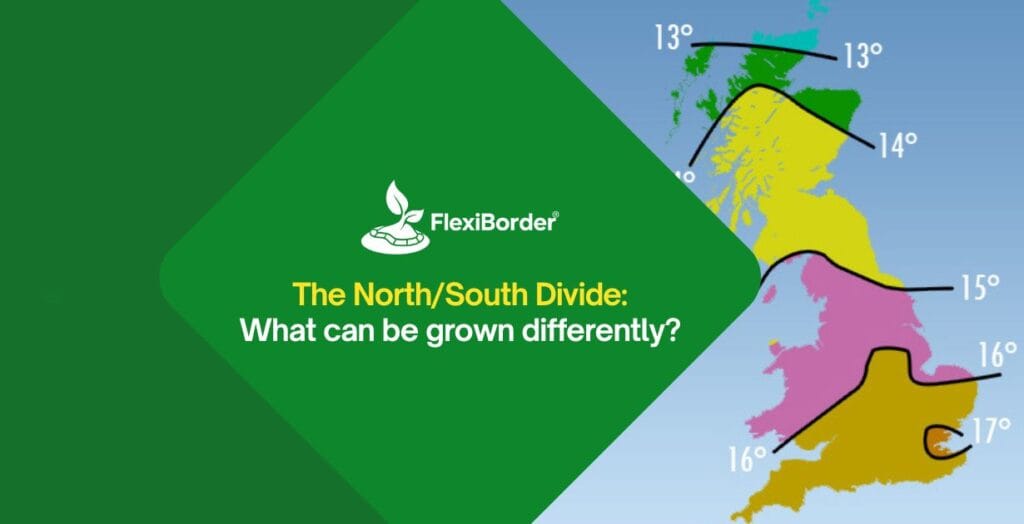
Is there a difference as to what can be planted in the south of the UK to the north of the UK in January? Yes – mainly because winter temperatures, frost frequency, wind exposure, and how quickly the soil warms up vary across the country. In January, the difference is less about completely different plants and more about how early you can start and how much protection you’ll need.
Below is a practical guide to what can be planted in the south of the UK in January and what can be planted in the north of the UK in January, plus an approximate boundary using recognisable town names.
Don’t forget to check out our guide to what can be grown in January in the UK.
Where Is the “South vs North” Boundary in the UK for January Planting?
There isn’t one official gardening boundary, but for most January planting advice, a useful split is roughly around the Midlands.
As a rule of thumb, think of a boundary running near towns such as Stoke-on-Trent – Derby – Nottingham – Sheffield. Areas generally south of Birmingham, Oxford, and Cambridge tend to be milder in winter, while areas north of Manchester, Leeds, and York are more likely to see colder nights and more frequent frost.
Coastal and western areas (for example, parts of Cornwall, Devon, and North Wales) can be milder than inland areas, while higher ground (Pennines, Peak District, Scottish Highlands) will behave more “northern” even if it’s further south.
Why January Growing Conditions Differ Between South and North
- Temperature & frost: The south often has fewer hard frosts; the north tends to get colder nights.
- Soil warming: Southern soils warm earlier, so planting out can happen sooner in spring.
- Day length & light: Similar across the UK, but exposure and cloud cover vary.
- Wind exposure: Northern and upland gardens may need more shelter for early starts.
What Can Be Planted in the South of the UK in January?
In the south (especially southern England and many coastal areas), you can often be a little more ambitious in January — particularly with bare-root planting and early sowings under cover.
Flowers to Plant in January (South UK)
- Bare-root perennials (plant on frost-free days): lupins, delphiniums, peonies, hardy geraniums, hostas
- Sweet peas (sow under cover or in a cold frame for earlier flowers)
- Tulips in pots (late planting is often fine in containers)
Vegetables to Start in January (South UK)
- Broad beans (often reliable under cloches or in sheltered spots)
- Onions and leeks (start from seed under cover)
- Spinach and winter lettuce (best under cover, or outdoors in mild spells with protection)
- Chitting seed potatoes (set up now for stronger early growth later)
Trees and Shrubs (South UK)
- Bare-root roses
- Fruit trees (apple, pear, plum) on frost-free days
- Hedging (beech, hawthorn, hornbeam) where soil isn’t frozen or waterlogged
South UK tip: If you’ve got a sheltered garden, a cold frame, or even a bright porch, you can start more seeds earlier — but keep expectations realistic: January growth is slow.
What Can Be Planted in the North of the UK in January?
In the north (including much of northern England, Scotland, and higher or more exposed areas), January planting is still worthwhile — but it’s usually smarter to focus on hardy options, bare-root planting when conditions allow, and starting seeds under cover to avoid losses from frost.
Flowers to Plant in January (North UK)
- Bare-root perennials (only on mild, frost-free days): lupins, delphiniums, peonies, hardy geraniums, hostas
- Sweet peas (sow indoors, greenhouse, or cold frame rather than outside)
- Bulbs in containers (pots can be moved to shelter during hard frosts)
Vegetables to Start in January (North UK)
- Broad beans (best started under cover; plant out later when conditions improve)
- Onions and leeks (seed trays under cover)
- Spinach and winter lettuce (under cover for dependable results)
- Chitting seed potatoes (great January job anywhere in the UK)
Trees and Shrubs (North UK)
- Bare-root trees and hedging (plant when the ground is workable and not frozen)
- Roses and fruit trees (choose sheltered positions; consider wind protection)
North UK tip: If your soil is heavy, frozen, or waterlogged, avoid planting into the ground. Use January to prep beds, improve drainage, and start plants under cover instead.
South vs North: Quick January Planting Checklist
In Both South and North (Best January Wins)
- Plant bare-root trees, shrubs, and perennials on frost-free days
- Sow hardy seeds under cover (greenhouse, cold frame, windowsill)
- Chit seed potatoes
- Prep beds with compost and improve drainage
More Likely Outdoors in the South (With Protection)
- Broad beans in sheltered spots
- Some hardy greens with cloches/fleece during mild spells
More Likely Under Cover in the North
- Broad beans started in modules
- Most salads and greens kept under cover for steadier results
FAQs
Is there a difference as to what can be planted in the south of the UK to the north of the UK in January?
Yes. The South typically has milder winter conditions, so you may be able to plant a little more outdoors during mild spells. In the north, it’s usually best to start more seeds under cover and wait longer before planting out, especially in frost-prone or exposed gardens.
What can be planted in the south of the UK in January?
In the south, you can plant bare-root perennials, roses, fruit trees, and hedging on frost-free days. You can also start broad beans, onions, leeks, spinach, and winter lettuce under cover, plus chit seed potatoes.
What can be planted in the north of the UK in January?
In the north, focus on bare-root planting only during mild, frost-free spells and start most vegetables under cover for better reliability. Broad beans, onions, leeks, spinach, and winter lettuce can all be started indoors or in a greenhouse, and January is a great time to chit seed potatoes.
Final Thoughts
Whether you’re gardening in the south or north, January is less about rapid growth and more about smart preparation. Use mild, frost-free days for bare-root planting, rely on protection and under-cover sowing, and you’ll be set up for a strong start when spring arrives.
