
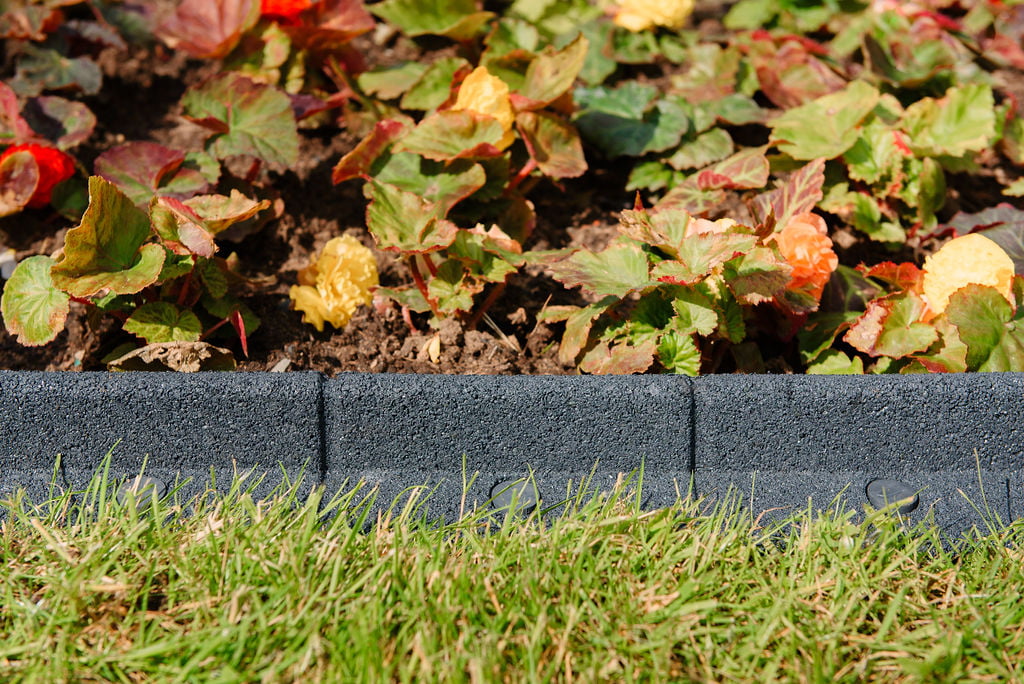
Edging is one of the most important yet often understated elements of a well-designed flower bed. While planting schemes and colour combinations tend to take centre stage, it is the edging that provides structure, definition, and long-term stability. But what is the role of edging for flowerbeds? And how can you use the right edging to achieve effective results?
Creating clear definition
The primary role of edging is to establish a clear boundary between your flower bed and the surrounding areas, such as lawns, paths, or patios. Without this separation, the edges can quickly become blurred, making the garden appear less organised. On the other hand, a defined border gives the flower bed a distinct shape and helps it stand out as a feature. Whether your design is formal with straight lines or more relaxed with gentle curves, edging ensures that the intended layout remains visible.
Preventing grass and weed encroachment
One of the most practical roles of edging is to act as a barrier. Grass naturally spreads into neighbouring areas, and without a clear boundary, it can quickly invade your flower beds.
Weeds can also take advantage of undefined edges, making them more difficult to control. Over time, this can lead to increased maintenance and competition for nutrients, water, and light.
Edging helps limit this spread by creating a physical separation between the lawn and the planting area. This makes it easier to keep the bed clear and allows your plants to grow without unnecessary competition.
Supporting soil and mulch retention
Flower beds often contain enriched soil and organic matter designed to support healthy plant growth. Without edging, this material can gradually move beyond the border, particularly during heavy rain or watering. Mulch, which is commonly used to retain moisture and suppress weeds, can also shift out of place if the edge is not secure.
Edging helps keep these materials contained within the flower bed. This not only maintains a tidy appearance but also ensures that your plants continue to benefit from improved soil conditions.
Improving the overall appearance of your garden
Edging has a strong visual impact on how your garden is perceived. Clean, well-maintained borders create a sense of order and care, even in more informal settings.
A neatly edged flower bed draws attention to the planting itself, allowing colours and textures to stand out more clearly. In contrast, poorly defined edges can make even the most carefully planned bed look untidy.
By reinforcing the shape of the bed, edging helps tie the garden together. It creates a consistent framework that supports both individual features and the overall design.
Making maintenance more efficient
Another key role of edging is to simplify routine garden maintenance. When the boundaries of a flower bed are clearly defined, tasks such as mowing, trimming, and weeding become much easier.
You can follow the edge as a guide when cutting the lawn, which helps achieve a more accurate finish and reduces the need for additional trimming. Edging also makes it easier to spot and remove weeds before they become established.
Preserving the shape of the flower bed
Over time, the shape of a flower bed can change if it is not properly supported. Soil movement, weather conditions, and regular use of the garden can all cause edges to shift.
Edging helps maintain the original design by holding the boundary in place. This is particularly important for curved beds, where even small changes can affect the overall appearance. Here, flexible garden edging can be the perfect choice, as this can bend easily to follow any shape, while also being incredibly durable and resistant to changing weather conditions.
So what is the role of edging for flowerbeds?
Edging forms the foundation that supports the appearance, function, and longevity of your flower beds. By creating clear boundaries, preventing unwanted spread, and simplifying maintenance, it plays a vital role in keeping your garden looking its best.
If you include effective edging as part of your garden design, you will find it much easier to maintain healthy, attractive flower beds. Over time, this simple feature can make a significant difference to both the look and usability of your outdoor space.
