
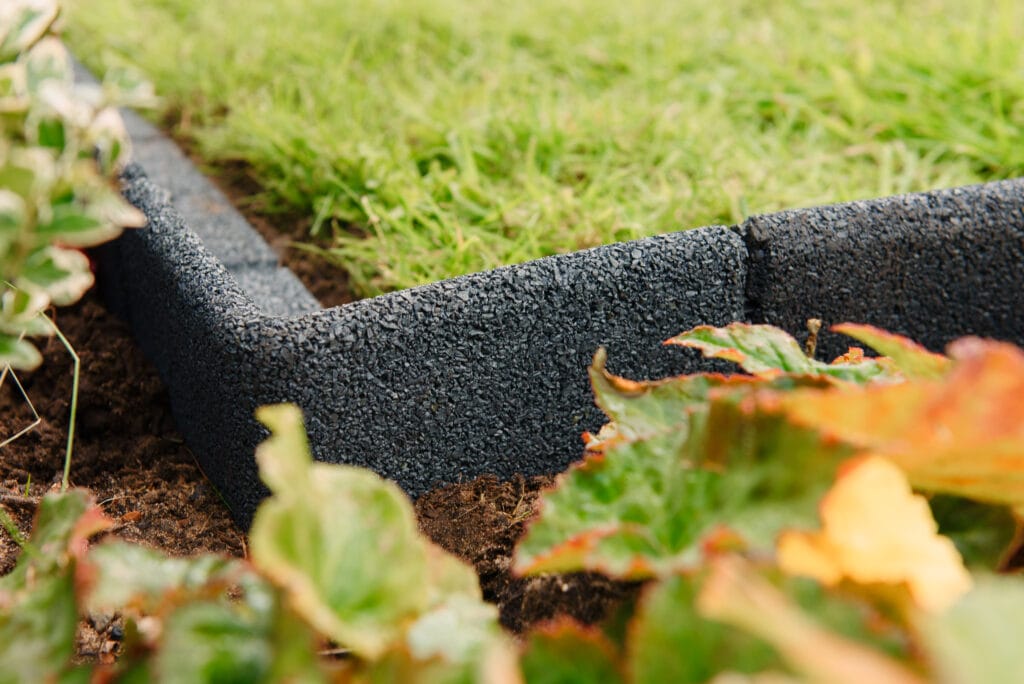
If you are planning to install artificial grass, you may be wondering whether edging is really necessary. At first glance, artificial grass can appear neat and self-contained, especially when it is freshly installed. However, edging can play a crucial role in both the appearance and durability of the finished lawn. So do you need edging for artificial grass? And what are the benefits of this?
So is edging needed for artificial grass?
In most cases, the answer is yes, you do need edging for artificial grass. A well-defined edge helps the lawn stay in place, improves the overall look of the space, and makes ongoing maintenance much easier. In addition, if you include edging as part of the installation from the beginning, you are far more likely to achieve a clean, professional result.
Why does edging matter for artificial grass?
Unlike natural grass, artificial grass does not grow into the surrounding soil. Instead, it relies on a stable base and secure edges to keep it in position. Without edging, the edges of the lawn can begin to lift or shift over time, particularly in areas that receive regular foot traffic.
Edging provides a firm boundary that supports the perimeter of the artificial grass. It helps hold the base materials in place and prevents movement caused by weather, moisture, or regular use. This is especially important in gardens where the lawn meets flower beds, pathways, or patios.
A clearly defined edge also gives the lawn a more structured appearance. Even high-quality artificial grass can look unfinished if the borders are uneven or poorly secured. Edging creates a clean line that improves the overall design of the garden.
Preventing movement and lifting
One of the main reasons you need edging for artificial grass is to prevent movement. Over time, repeated use can place pressure on the edges of the lawn. If there is nothing to support the perimeter, the surface can begin to lift slightly, especially around corners or curves.
Edging helps anchor the artificial grass and keeps the shape consistent. This makes the lawn safer to walk on and reduces the likelihood of uneven areas developing.
It also helps protect the base layers underneath. The materials used beneath artificial grass are carefully compacted to create a smooth, stable surface. Edging keeps these layers contained and prevents them from gradually shifting out of place.
Creating a clean and professional finish
Appearance is another important reason to install edging around artificial grass. A clean border makes the lawn look more professional, realistic and more carefully planned.
Without edging, the transition between artificial grass and other parts of the garden can look rough or unfinished. Over time, this can make the entire area feel less polished, even if the surface of the grass itself remains in good condition.
A defined edge also makes it easier to integrate the artificial grass into the rest of your garden design. Whether the lawn borders planting areas, decorative stones, or a patio, edging helps everything look connected rather than separate.
Making maintenance easier
Although artificial grass requires less maintenance than natural grass, it still benefits from regular care. Edging makes this much simpler by creating a clear boundary that is easy to follow.
When the edges are secure and well defined, you can clean the surface more effectively. Leaves, debris, and soil are less likely to gather around loose borders, which helps the lawn stay tidy for longer.
Edging also prevents surrounding materials from spreading onto the artificial grass. For example, soil from nearby flower beds or loose gravel can easily move onto the lawn if the edges are not properly contained. A stable border reduces this problem and helps keep the surface looking fresh.
Supporting the long-term performance of your lawn
Installing artificial grass is often a long-term investment, so it makes sense to protect it from the start. Edging plays an important role in keeping the lawn secure and maintaining its appearance over time.
Without edging, small issues such as slight movement or uneven borders can gradually become more noticeable. By including a proper edge during installation, you help prevent these problems before they develop. FlexiBorder can be the perfect choice for edging your artificial lawn. Available in a range of sizes, colours and options for you to choose from for straight forward garden edging for any garden space, FlexiBorder can also bend to a 70 degree angle, making this a fantastic option for curved landscaping features. Take a look today.
