

Any manicured garden will have vibrant lawns and flowerbeds bursting with colour, but it’s the edging that makes this possible. With effective borders, plants will have the room to grow, weed spread will be reduced, and water movement will be managed. But with so many options available, from stone and metal, to wood and plastic, as well as rubber, how do you choose the right option for your space? And what are the garden edging ideas to improve your landscape?
Why does garden edging matter?
Garden edging isn’t just about creating the perfect visual or aesthetic result, as this also brings a range of practical benefits, including:
- Keeping lawns and flower beds neat- no more grass creeping into your flower beds.
- Preventing soil erosion- especially after heavy rain.
- Making mowing easier- no need to fight with overgrown edges.
- Defining your garden design- turning your outdoor space into a cohesive landscape.
Garden edging ideas for a stunning outdoor space
Now that we’ve covered the practical benefits, it’s important to note that different types of garden edging can bring different aesthetic styles to your garden space. Some of the most effective garden edging ideas include:
- Natural and traditional options
- Modern and low maintenance options
Natural and traditional garden edging ideas
- Stone garden edging- Stone borders can bring a timeless, rustic charm to your outdoor space, and can suit both country gardens and modern spaces. You can arrange natural stones or cobblestones along your flower beds, choosing irregular shapes for a cottage-garden look. Alternatively, you can use uniform pavers for a more polished, modern finish. However, it’s important to note that these can be heavy to install and may shift over time.
- Brick edging- Bricks can create a neat, structured look. You can lay them flat for a subtle border, or stand them on their edge for a raised effect that will be perfect for highlighting pathways and flower beds. Brick edging is durable but can be costly for large areas.
- Wooden log borders- Logs offer a natural aesthetic that blends well with the greenery in your garden. You can create a charming, woodland-inspired edge using treated wooden logs or half-log rolls. This is also effective for curved beds, and works beautifully in naturalistic landscapes. This type of border is affordable but prone to rot unless treated regularly.
Modern and low-maintenance garden border ideas
- Metal edging- Sleek and modern, metal creates clean lines for contemporary gardens. It’s perfect for square and rectangular borders in neat lines. This is long-lasting but can be expensive and have sharp edges, so they aren’t ideal for family gardens or pet friendly properties. You can opt for powder-coated options that will resist rust and maintain a neat appearance.
- Plastic edging- Plastic edging for the garden is the most budget-friendly choice, and as this is flexible, you can use it to create sweeping curves that will draw attention and make your garden stand out. However, plastic edging often lacks durability and can become brittle over time, needing to be replaced frequently.
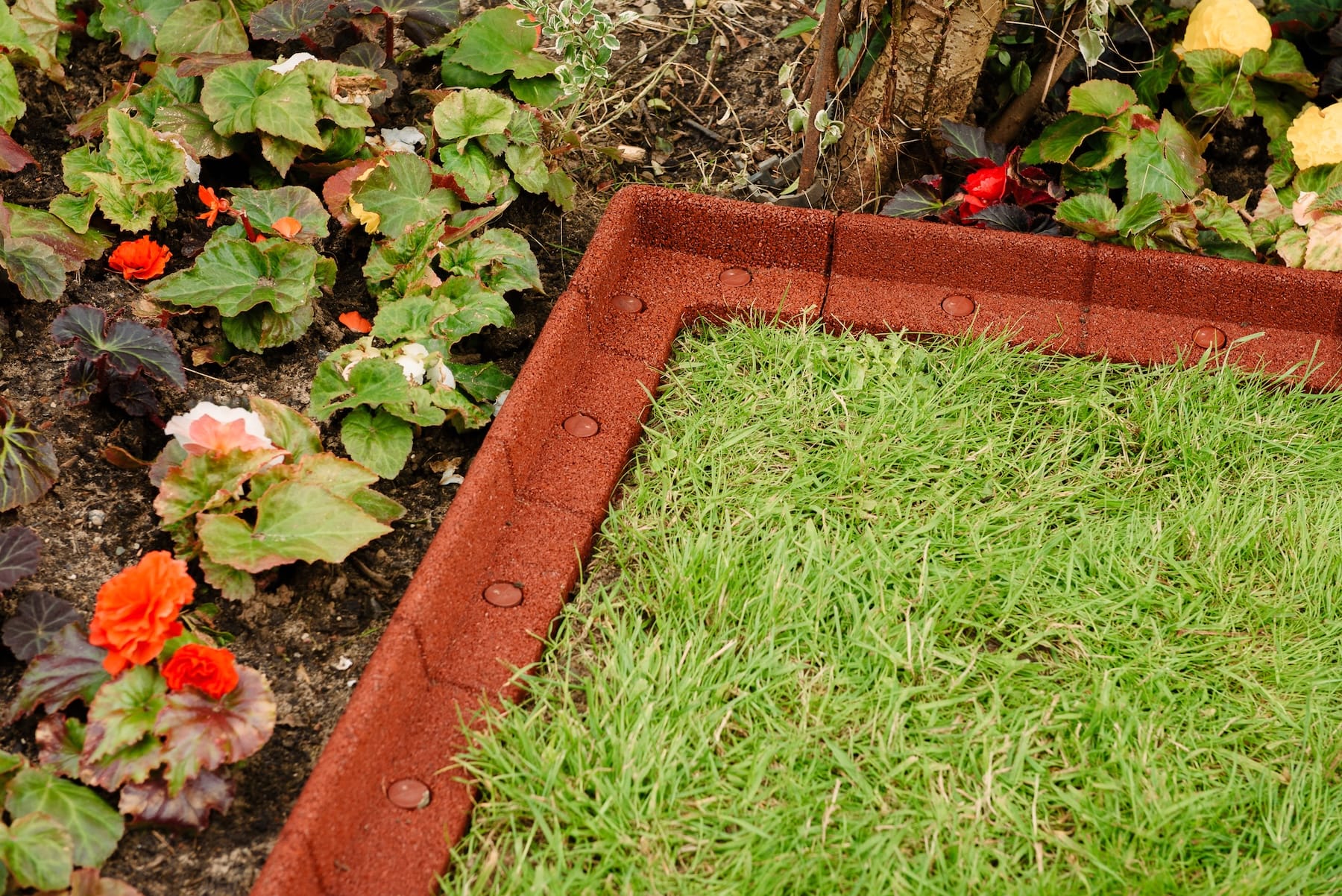
- Rubber edging with FlexiBorder- FlexiBorder rubber edging combines practicality with sustainability. As this is made with recycled rubber, it is weatherproof, durable and long lasting, while also being incredibly flexible to create curved or even round flowerbeds or lawns. FlexiBorder works for lawns, flower beds, paths, and even playgrounds. It’s the ideal blend of function and aesthetics.
-

Grey Flexiborder
Price range: £34.99 through £1,259.99 Select options This product has multiple variants. The options may be chosen on the product page
-

Black FlexiBorder
Price range: £34.99 through £1,259.99 Select options This product has multiple variants. The options may be chosen on the product page
-

Brown FlexiBorder
Price range: £34.99 through £1,259.99 Select options This product has multiple variants. The options may be chosen on the product page
-

Sage FlexiBorder
Price range: £34.99 through £1,259.99 Select options This product has multiple variants. The options may be chosen on the product page
-

Green FlexiBorder
Price range: £34.99 through £1,259.99 Select options This product has multiple variants. The options may be chosen on the product page
-

Terracotta FlexiBorder
Price range: £34.99 through £1,259.99 Select options This product has multiple variants. The options may be chosen on the product page

FAQ’s for garden edging ideas
Installation and setup
Q: How deep should garden edging be installed?
A: Most edging should be buried 2-4 inches deep, with 2-3 inches visible above ground. For areas with heavy foot traffic or grass, go deeper (up to 6 inches) for better stability.
Q: What tools do I need to install garden edging?
A: Basic tools include a spade or edging tool, rubber mallet, measuring tape, and string line for straight edges. For some materials, you may need a saw for cutting and a level for ensuring even installation. FlexiBorder offers simple installation as this is fixed in place with the provided pegs.
Q: Can I install garden edging myself, or do I need a professional?
A: Most garden edging can be installed as a DIY project. Flexible materials like rubber or plastic are easiest, while stone and brick may require more skill and planning.
Material selection and durability
Q: What’s the most durable garden edging material?
A: Quality rubber edging tends to last longest, often 10+ years. Natural stone is also very durable but may shift over time. Plastic is the least durable as this becomes brittle and cracks.
Q: Which garden edging works best for curved flower beds?
A: Flexible materials work best for curves: rubber edging, flexible plastic, or brick laid in a curved pattern.
Q: What’s the most budget-friendly edging option?
A: Plastic edging is cheapest upfront, but consider long-term costs. Rubber edging costs more initially but lasts longer. For natural materials, repurposed bricks or stones can be economical.
Specific situations
Q: What edging works best around trees?
A: Flexible materials like rubber edging work well as trees grow and roots expand. Avoid rigid materials that may crack or restrict root growth.
Q: Is there edging suitable for slopes or uneven ground?
A: Flexible edging (rubber or bendable plastic) adapts well to grade changes. For steep slopes, consider stepped stone or terraced brick edging.
Q: What’s the best edging for vegetable gardens?
A: Food-safe materials are important. Cedar boards, stone, brick, or quality rubber edging work well. Avoid treated lumber or materials that might leach chemicals.
Q: Can garden edging help with drainage issues?
A: Yes, raised edging can help direct water flow and prevent soil erosion. Consider permeable materials and proper grading when installing.
How can you choose the best garden edging ideas for your space?
If you’re looking for garden edging for your outdoor space, there are a number of factors to consider, including:
- Initial cost vs long-term value: While plastic edging offers the lowest upfront cost, it may need replacing every 3-5 years. Stone and brick fall in the mid-range while metal and quality rubber edging cost more initially but offer excellent longevity, making them cost-effective over time.
- Installation costs: Factor in whether you’ll need professional installation. Stone and brick may require skilled labour, while flexible materials like rubber or plastic are typically DIY-friendly, saving on labour costs.
- Low-maintenance options: Metal, rubber, and stone require minimal upkeep once installed. Simply occasional cleaning and repositioning if needed.
- Garden use: For high-traffic areas, durable materials like metal, quality rubber, or stone are perfect. For pet-friendly gardens and family homes, it’s important to avoid sharp edges on metal or stone borders.
- Lawn-mower friendliness: An often forgotten-about factor think about is if your lawn edging is mower-safe. With FlexiBorder borders, you can roll over the edge easily and not have to worry about scratching the mower or garden borders or having to use a strimmer to get to the edges.

Why is rubber edging a smart choice?
After exploring all these garden edging ideas, one option that is gaining popularity among both homeowners and professional landscapers is rubber edging, and FlexiBorder in particular. Why? Well, this garden edging option ticks almost every box that gardeners care about: style, practicality, and sustainability.
- Longevity- FlexiBorder doesn’t crack, splinter, or degrade easily, even after years of exposure to sun, rain, and frost. That means that you won’t need to replace your garden edging every season or deal with warped and brittle materials.
- Flexibility- Whether it’s crisp straight lines for a modern look, or sweeping curves for a soft, organic feel, FlexiBorder can achieve it all.
- Easy installation- FlexiBorder is easy to install in minutes with just a few pegs and a mallet.
- Versatile style- FlexiBorder is available in a variety of colours and finishes, so it blends seamlessly with any garden theme.
Upgrade your garden today
From rustic stone to wood and metal, there are countless garden edging ideas. But if you’re after style, durability, and eco-friendliness, FlexiBorder is hard to beat. If you’re ready to transform your garden, shop FlexiBorder now, and install a beautiful, low-maintenance garden edge that lasts.
