


Whether your path runs through a lawn, borders flower beds, or winds through different areas of the garden, proper edging helps maintain its shape and improves long-term durability. But how can you edge a garden path? And what are the steps you should follow?
Why is garden path edging important?
Before starting, it is worth understanding why edging matters. Garden path edging creates a clear separation between the path and the surrounding landscape. This helps prevent grass, soil, mulch, or gravel from spreading where it is not wanted. Edging also provides structural support by holding the path materials in place and reducing the risk of movement caused by weather conditions or regular foot traffic.
How to edge a garden path: A step by step guide:
Plan the shape of the path
The first step is deciding exactly where the edge will sit. If you are creating a new path, mark out the route before beginning any work. If you are improving an existing path, take the opportunity to assess whether the current shape still works well within the garden.
Then, you can use a hosepipe, rope, or garden marking spray to outline the path. This allows you to experiment with different shapes and widths before making any permanent changes.
For informal gardens, gentle curves often create a more natural appearance. For formal spaces, straight lines may be more appropriate. Whatever shape you choose, aim for consistency.
Prepare the edge
Once the shape has been finalised, you should clear the area along the border. This includes removing any grass, weeds, stones, or loose debris that could interfere with the installation. Alternatively, if the path already exists, you may need to trim back overgrown lawn edges or remove soil that has accumulated along the sides. Either way, it’s important to create a clean working area as this will help you achieve a more accurate finish.
This is also a good opportunity to check that the path surface is level and that the edges are clearly visible.
Create a defined border
The next step is to establish a clear edge between the path and the surrounding garden. You can do this by using a sharp edging tool or spade, cut along the marked line. It’s important that you maintain a consistent depth while doing this, for a level and professional finish.
By creating this clean edge, you can immediately improve the appearance of the path and create a good foundation for any edging solution you plan to install. If the path borders a lawn, this defined cut will also help prevent grass from spreading onto the path in the future.
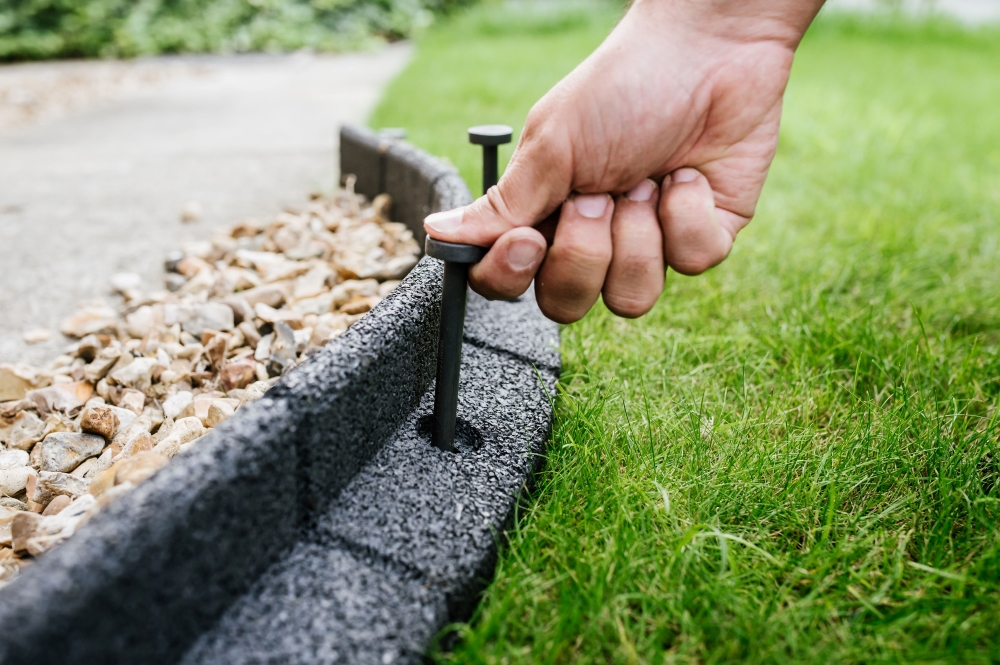
Rubber edging is naturally flexible, so it can follow any shape of garden path with ease.
Install suitable edging
Once the border has been prepared, you can install the edging itself. This will create a stable boundary that follows the shape of the path and helps contain the surrounding materials. As such, the edging should sit securely and maintain a consistent line along the entire length of the path.
There are a range of suitable edging materials to choose from, including bricks and stone, timber, and recycled rubber edging. Each of these bring different characteristics to your garden, and different levels of maintenance. Rubber edging for example can be a great choice as this is naturally flexible, so it can follow any shape of garden path with ease.
Whichever edging material you choose, it’s important to take your time during the installation process so that you can regularly make sure that the edging follows the intended shape without any uneven sections.
Finish the surrounding areas
After the edging has been installed, you’ll need to tidy the surrounding area to create a clean final result. This involves removing any excess soil or debris and ensuring the transition between the path and adjacent areas is neat. If the path borders flower beds, you may wish to refresh mulch or redefine planting areas to complement the new edge.
These finishing touches help the edging stand out and contribute to a more polished overall appearance.
Maintain the edge throughout the year
Once your garden path has been edged, regular maintenance will help keep it looking its best. This means that you should check the border periodically to ensure it remains secure and free from encroaching grass or weeds. Light trimming and occasional cleaning will usually be enough to keep the edges looking sharp.
Edging a garden path is easier than it looks
Edging a garden path is one of the most effective ways to improve both the appearance and functionality of your outdoor space. By planning carefully, creating a clean border, and choosing a suitable edging solution, you can achieve a professional-looking finish that enhances your garden for years to come.