
Lawn edging is one of the most effective ways to give your garden a neat and well-maintained appearance. A clearly defined edge creates structure, improves the look of your lawn, and makes ongoing maintenance far easier. However, it is also an area where small mistakes can have a noticeable impact. So what are the common lawn edging mistakes, and how can you avoid them?
Creating uneven or inconsistent lines
One of the most common mistakes is failing to maintain a smooth, consistent line. Uneven edges can make the lawn look irregular and poorly defined, even if the rest of the garden is well cared for.
This often happens when edging is done too quickly or without clearly marking the boundary first.
How to avoid it:
Always mark out the edge before you begin. You can use a hosepipe, string, or garden marking spray to define the line. Take time to step back and check the shape from different angles. When cutting the edge, work slowly and keep your movements steady to maintain a consistent finish.
Ignoring the shape of the garden
Another common issue is choosing a shape that does not suit the overall layout of the garden. For example, forcing straight lines into a space that would benefit from softer curves can make the design feel rigid.
Similarly, poorly planned curves with sharp or awkward turns can look unnatural.
How to avoid it:
Consider the style of your garden before deciding on the edge. Gentle curves often work well in informal spaces, while straight lines suit more structured layouts. Aim for shapes that feel balanced and easy to follow visually.
Neglecting regular maintenance
Even a well-cut lawn edge will not stay sharp without regular care. Over time, grass will naturally grow beyond the border, gradually softening the line and making the lawn look less tidy.
How to avoid it:
Plan to neaten the edges regularly during the growing season. Light trimming every few weeks is usually enough to maintain a clean line. Keeping on top of small adjustments will prevent the need for more time-consuming work later.
Overlooking the importance of edging support
Many people focus only on cutting a neat line and overlook the importance of supporting the edge itself. Without some form of reinforcement, the border can shift over time, particularly in areas with softer soil or heavy use.
This can lead to uneven edges and a gradual loss of shape.
How to avoid it:
Consider using a suitable edging solution to help maintain the boundary. This is especially useful for longer borders or areas where the lawn meets flower beds, paths, or other features. A stable edge will hold its shape more effectively and reduce ongoing maintenance.
Using inflexible materials for curved edges
Curved lawn edges can add visual interest, but they can be difficult to maintain if the wrong materials are used. Rigid edging may struggle to follow the shape smoothly, resulting in uneven or segmented lines.
How to avoid it:
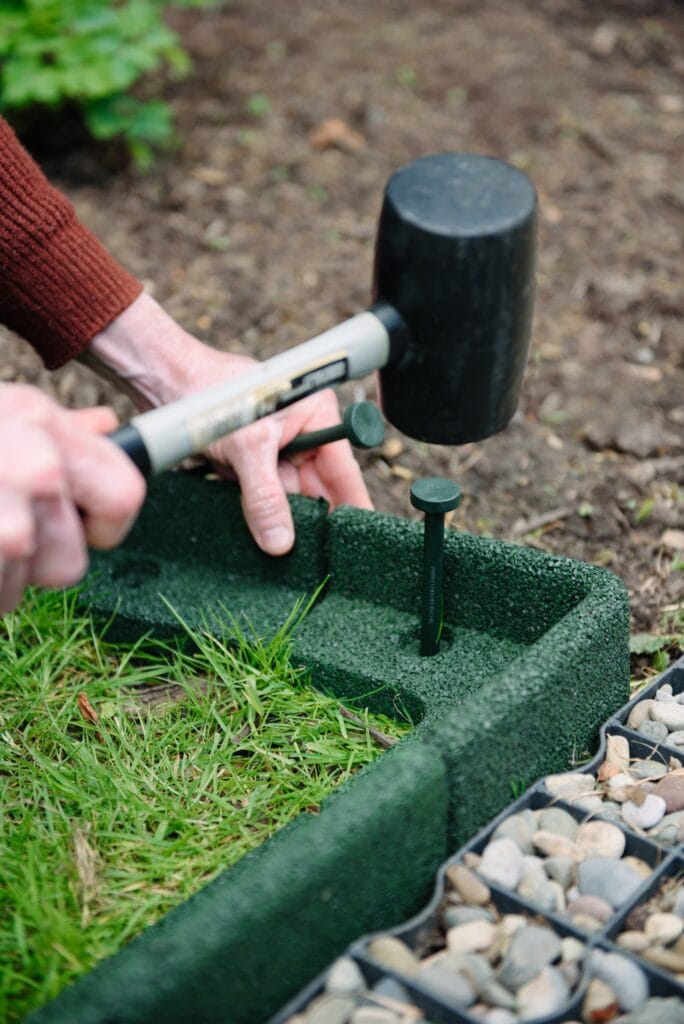
If your design includes curves, choose a material that can adapt to the shape. FlexiBorder is a practical option because it bends easily and creates a smooth, continuous line. This helps preserve the natural flow of the curve and improves the overall finish. With FlexiCorner, this can also be perfect for straight edges and tight, professional, 90 degree corners.
Poor installation of edging
Even good-quality edging can fail if it is not installed properly. Loose or uneven installation can cause sections to move, sink, or become misaligned over time.
This can quickly affect both the appearance and function of the lawn edge.
How to avoid it:
Take care during installation to ensure the edging is secure and level. Follow the natural line of the lawn and check that the border sits evenly along the entire length. A well-installed edge will remain stable and require less adjustment in the future.
Failing to consider long-term durability
Another mistake is choosing edging solutions without thinking about how they will perform over time. Some materials may look suitable initially but can deteriorate when exposed to moisture, temperature changes, or regular use.
How to avoid it:
Select edging that is designed for outdoor conditions and long-term use. FlexiBorder, for example, is resistant to weather changes and can maintain its shape over time. This makes it a reliable option if your garden experiences a wide range of conditions throughout the year.
Avoiding common lawn edging mistakes
Lawn edging may seem like a small detail, but it has a significant impact on the overall look of your garden. By avoiding common mistakes and taking a careful approach, you can create edges that remain neat, defined, and easy to maintain.
